
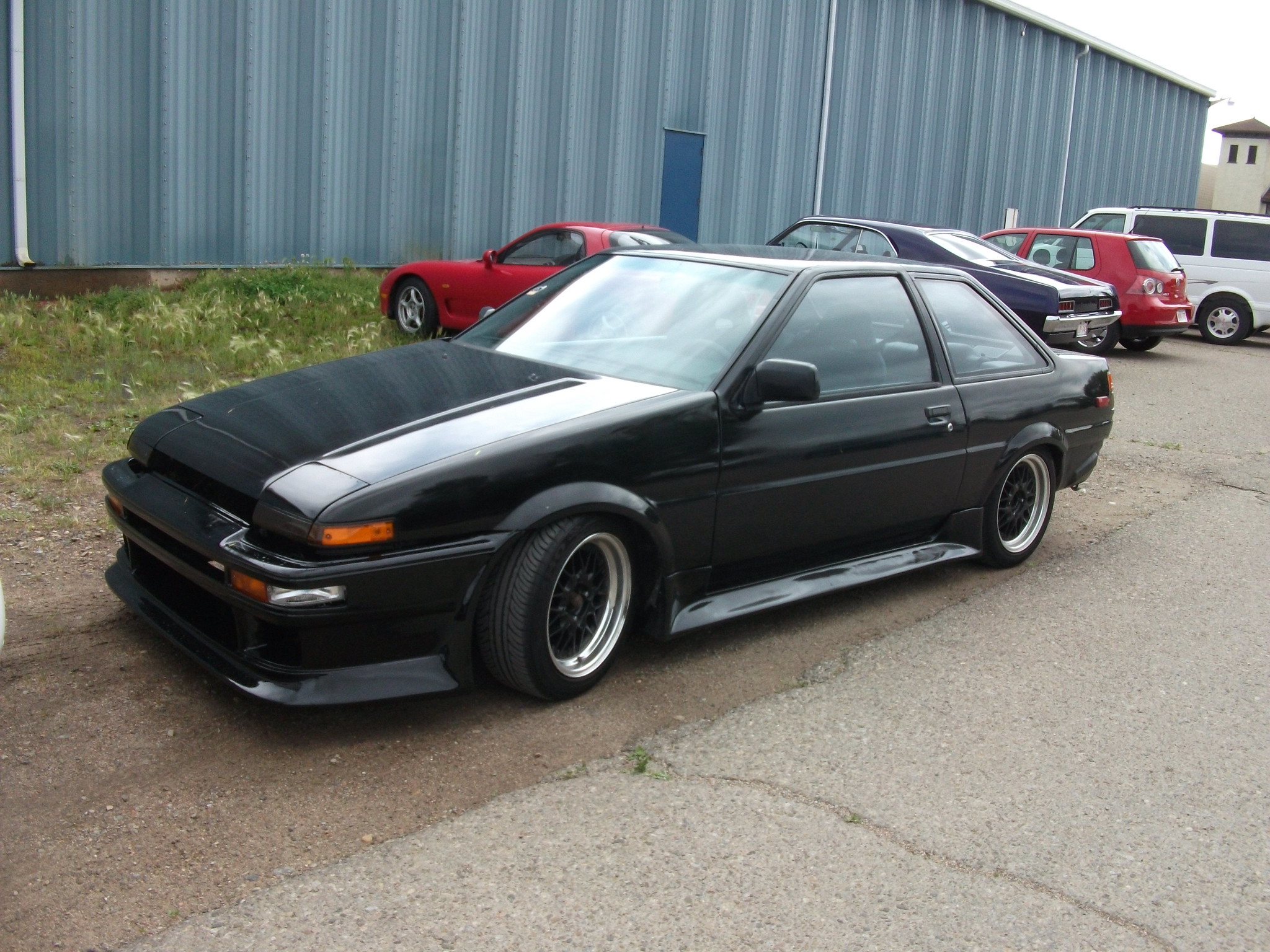
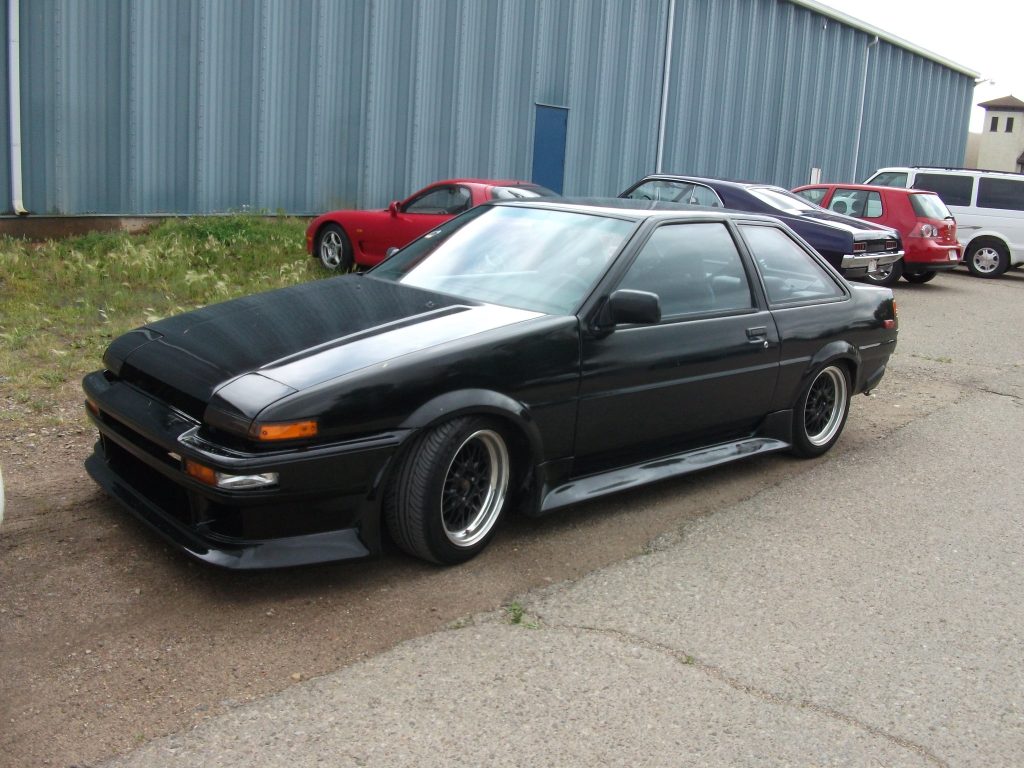
The Toyota AE86, also known as the “Hachiroku” (Japanese for “eight-six”), is a compact car that earned a cult following thanks to its exceptional balance, affordability, and role in car culture. Introduced in 1983 as part of the fifth-generation Toyota Corolla and Sprinter lineup, the AE86 was produced until 1987. Its lightweight design, rear-wheel-drive configuration, and timeless appeal have solidified its place as a beloved classic among enthusiasts worldwide.
Origins and Specifications
The AE86 was available in two body styles: a two-door coupe and a three-door hatchback. It came in two variants: the Corolla Levin, which featured pop-up headlights, and the Sprinter Trueno, distinguished by its fixed headlights. Both versions offered a sporty look while remaining practical.
Under the hood, the AE86 was powered by Toyota’s revered 4A-GE engine. This naturally aspirated, 1.6-liter inline-four engine featured dual overhead camshafts (DOHC) and delivered 130 horsepower. While modest by today’s standards, this engine provided a spirited driving experience when paired with the car’s lightweight frame, which weighed around 2,200 pounds (1,000 kg).
The rear-wheel-drive layout was the standout feature, allowing for superior handling dynamics and making the AE86 a favorite for motorsport, especially drifting and circuit racing. The car also featured a well-tuned suspension system with independent MacPherson struts in the front and a live axle with coil springs in the rear, offering excellent balance and control.
The AE86 in Motorsport
The AE86 became a legend in motorsports, particularly in rallying, touring car racing, and drifting. It achieved significant success in Group A and Group N categories in the 1980s, competing against more powerful rivals. Its lightweight design, agility, and rear-wheel-drive setup allowed skilled drivers to maximize its potential on tight, technical tracks.
In the realm of drifting, the AE86 was immortalized by drivers like Keiichi Tsuchiya, the “Drift King.” Tsuchiya’s use of the AE86 in developing the modern art of drifting brought global attention to the car. Its predictable handling and balance made it a favorite for sideways action, cementing its reputation as a drifting icon.
Pop Culture and Legacy
The AE86’s cultural impact exploded with its starring role in the Japanese manga and anime series Initial D. Protagonist Takumi Fujiwara uses his father’s AE86 to deliver tofu while honing his skills as a street racer on mountain roads. The show showcased the car’s capabilities and introduced it to a global audience, sparking interest in both the vehicle and the drifting subculture.
Even decades after its production ended, the AE86 continues to thrive in the enthusiast community. Its simplicity and mechanical purity make it an ideal platform for modifications, whether for racing, drifting, or show purposes. Fans often swap engines, upgrade suspensions, and fine-tune their AE86s to extract maximum performance while retaining its character.
Modern Influence
Toyota paid homage to the AE86 with the release of the Toyota 86 (and its Subaru sibling, the BRZ) in 2012. These modern sports cars embrace the spirit of the AE86 with their lightweight design, rear-wheel-drive layout, and affordability, providing enthusiasts with a contemporary equivalent of the Hachiroku.
Conclusion
The Toyota AE86 stands as a testament to how a well-engineered, modestly powered car can achieve legendary status. Its impact on motorsport, pop culture, and the enthusiast community ensures its place in automotive history. The AE86 is more than just a car—it’s a symbol of driving passion, creativity, and timeless design.